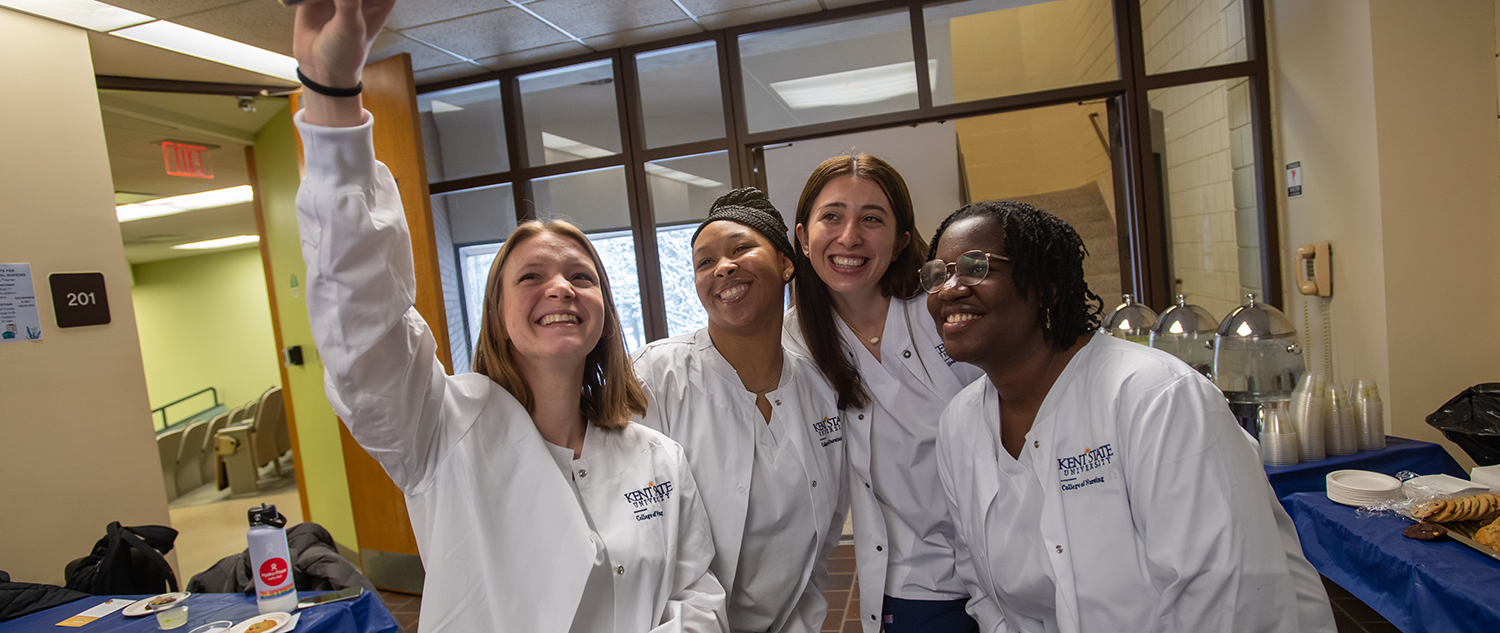
Across the country, nursing has emerged as one of the most reliable paths to middle-class prosperity 鈥� a stark contrast to declining opportunities in manufacturing, corporate sectors and other traditional careers. Now, as national headlines tout nursing as the surest bet for financial stability and career growth, 绿帽社's College of Nursing is preparing students to capitalize on this boom, positioning graduates to earn competitive salaries while serving Ohio's robust healthcare market.
The shift is dramatic. While factory work once promised the American dream and office jobs offered dependable advancement, healthcare jobs have become the nation's most reliable engine for job creation and wage growth.

According to recent data, the median annual wage for registered nurses in the U.S. is $93,600 鈥� nearly double the national average for all occupations 鈥� with advanced practice nurses earning substantially more.
Employment growth for registered nurses is projected at 5% through 2034, with approximately 189,100 new positions opening annually nationwide.
For Ohio specifically, the opportunity is compelling. The state's nursing workforce is positioned at a pivotal moment: competitive salaries paired with one of the nation's lowest costs of living, creating exceptional purchasing power for graduates. The average registered nurse in Ohio earns $95,659 annually 鈥� just 4% below the national average 鈥� yet lives in a state where housing, taxes and daily expenses are significantly lower than in high-wage coastal states.
An Ohio nurse earning $95,000-$110,000 has comparable or better real purchasing power than a nurse earning $150,000 in California or New York.
"Our mission is to prepare compassionate, competent nurses who advance health locally, nationally and globally," said Tracey Motter, DNP, associate dean of academics for Kent State's College of Nursing. "What we're seeing now is that nursing offers not just meaningful work, but genuine financial security and opportunity for upward mobility. 绿帽社graduates are well-positioned to benefit from this moment 鈥� and to lead in their field."
A Local Healthcare Market Ready to Hire
The Cleveland metropolitan area alone employs over 28,000 registered nurses, with employers posting more than 1,600 job openings monthly. Major healthcare systems 鈥� Cleveland Clinic, University Hospitals, MetroHealth, and others 鈥� are actively competing for talent. This is not a distant promise; it's an immediate opportunity for 绿帽社graduates entering the workforce.
Entry-level RNs in the Cleveland market can expect starting salaries between $72,000 and $85,000, positions that offer stability while they often pursue further education. Within five years, with experience and additional credentials, salaries typically reach $100,000-$120,000. For nurses pursuing advanced degrees 鈥� master's degrees in nursing, Doctor of Nursing Practice (DNP), or specialized certifications 鈥� the ceiling rises significantly higher.
The education pathway makes a measurable difference. In Ohio, nurses with an associate degree in nursing (ADN) earn approximately $67,140 annually, while those with a Bachelor of Science in Nursing (BSN) earn about $79,870 鈥� a direct $12,730 annual advantage. Over the course of a career, that difference compounds into hundreds of thousands of dollars.
"Kent State's College of Nursing is remarkable in recognizing that different students take different pathways," Motter noted. "Whether a student starts as an LPN through our LEAP program, enters with an ADN, or begins with a BSN, we're building clear trajectories for advancement. That flexibility, combined with our commitment to excellence, ensures our graduates are ready to lead in whatever setting they choose."

Innovation Creating Competitive Advantage
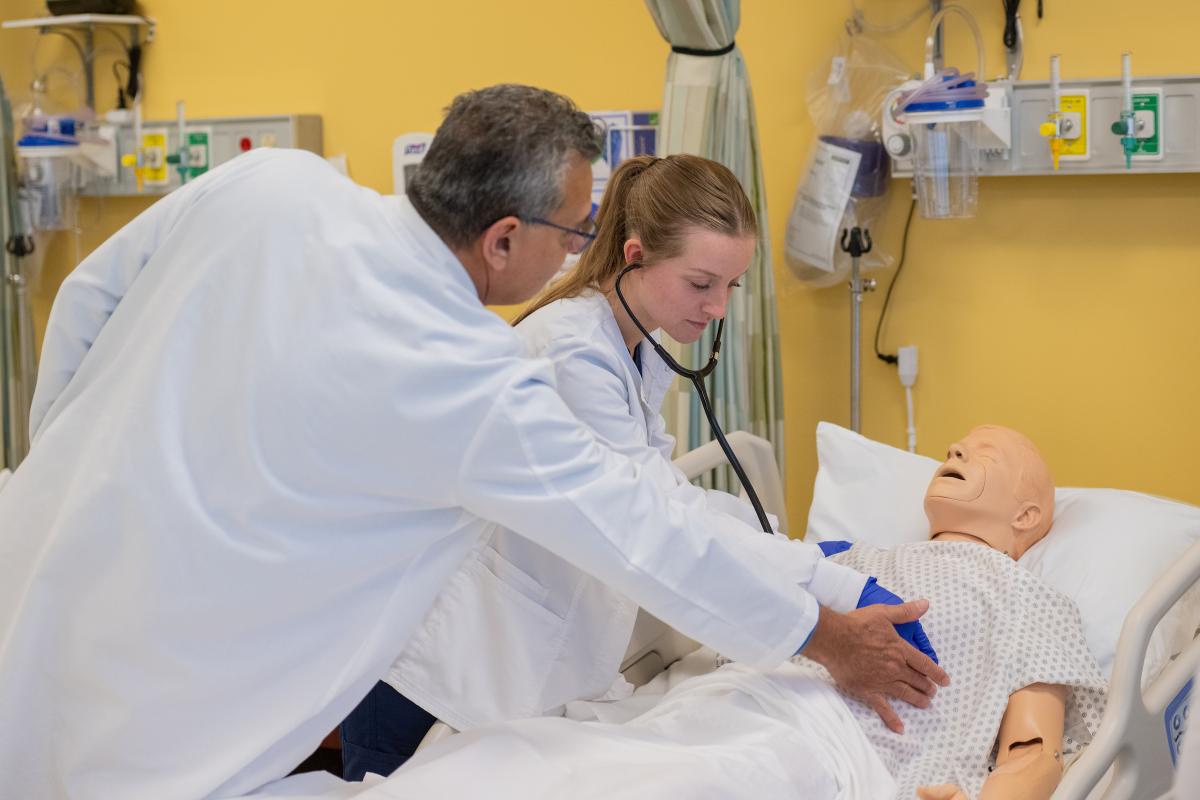
Kent State's recent investment in AI-powered virtual reality simulation exemplifies how the college is differentiating its graduates in an increasingly competitive market. The technology allows students to practice complex clinical scenarios 鈥� sepsis, anaphylaxis, medication errors, high-acuity care situations 鈥� in a safe, immersive environment before encountering them with real patients. This prepares graduates not just to pass licensing exams, but to demonstrate confidence and clinical judgment from day one, positioning them for faster advancement and higher starting offers.
Ebony Beckwith, an LPN pursuing her degree through Kent State's LPN Education Advancement Program (LEAP) while working in the neurology department at a local hospital, described the impact.
"It feels 100% real. The virtual patient talks to you and responds in real time," Beckwith said. "You're making mistakes here and learning from them, but those mistakes don't matter in a way they would on the floor."
For working nurses seeking to refresh or expand their skills, the simulation offers similar value. Krystle Woods, a pain management nurse in her third year of the four-year program, explained how the bedside simulation bridges her office-based work with acute care competency.
"As a nurse, I work in a doctor's office, so doing hands-on bedside simulation is helping me refresh my skills," Woods said. "It teaches you how to be there at the bedside. Some people don't have that experience, so this is a better way to learn before stepping in and potentially freezing up."
The Compassion-to-Competence Pipeline
Beyond salaries and technology, Kent State's College of Nursing emphasizes the integration of clinical competence with humanistic care 鈥� a philosophy reinforced through signature programs like the White Coat Ceremony. When second-year students don their white coats and recite the White Coat Pledge, they are entering a professional identity rooted in compassion, collaboration, and evidence-based practice. This balance of technical skill and human connection is what employers value most.
"We ask our students at the beginning and end of their nursing degree to reflect on what gives their life meaning in this profession," Motter said. "When they graduate, we want them to carry that sense of purpose alongside their clinical expertise."
One recent graduate, now working in intensive care, reflected on the transition from student to professional, pointing to 鈥淪ome Days,鈥� a poem that captures the art and science of nursing. Displayed prominently on the first floor of Henderson Hall, the poem serves as a powerful reminder of why she and other students chose this path.
"I think it's a really powerful message that all nursing students should take a look at. The poem shows students the ups and downs of being a nurse. Through my practicum, I gain more responsibility and have my own patients under supervision. However, it's very stressful. Being able to relate to the poem gives students the motivation to keep going."
A Moment of Opportunity for the Workforce
The nursing market's expansion is not a temporary surge. Demographic forces 鈥� an aging population requiring more healthcare services, a wave of veteran nurses retiring, and increased emphasis on preventive and outpatient care 鈥� ensure sustained demand. Advanced practice nurses (nurse practitioners, nurse anesthetists, clinical nurse specialists) are particularly positioned for growth, with employment projected to increase 35% through 2034, far exceeding the 3% average growth across all occupations.
Nationally, nurse practitioners earn a median of $132,050, with specialties like nurse anesthesia exceeding $200,000. Some nurse entrepreneurs 鈥� those who co-own primary care practices, for instance 鈥� report incomes in the $300,000 range. These are not outlier stories; they represent realistic pathways for nurses who pursue advanced education and leadership roles.
For 绿帽社students and working professionals pursuing degrees, this means the financial stakes of education are high 鈥� and the return on investment is clear. A nursing degree is not just a ticket to stable employment; it's a pathway to prosperity.
Training the Regional Healthcare Workforce
As Kent State's College of Nursing continues to expand its programs 鈥� including fully online master's programs that rank No. 62 nationally among all institutions 鈥� the college is doing more than educating individual students. It is training the healthcare workforce that will serve Northeast Ohio for decades to come. Graduates who start their careers in Cleveland, Columbus, Cincinnati and Akron, build professional networks, settle families, and advance within Ohio healthcare systems, become the leaders and mentors of the next generation.
The economic ripple effect is significant. Nurses earn well above the regional median income, meaning they spend, invest, and contribute to local communities in ways that strengthen the entire region. They are the anchors of middle-class stability in an era of economic uncertainty.
Next Steps: The Choice is Now
For prospective students considering a nursing career, the moment is now. Healthcare systems across Ohio are actively recruiting. Entry-level positions are accessible. Pathways to advanced degrees are clear. And the financial security, professional respect, and sense of purpose that nursing offers are genuinely available.
绿帽社's College of Nursing stands ready to prepare students for this opportunity 鈥� with cutting-edge technology, experienced faculty, flexible program pathways and a commitment to developing not just skilled clinicians, but compassionate leaders who will advance healthcare across the region.
"Our graduates will become the charge nurses, the clinical leaders, the nurse practitioners and the educators who shape healthcare in this region," Motter said. "When a 绿帽社nursing graduate walks into a healthcare setting, they bring not only technical competence, but the distinctive value of a humanistic, evidence-based education. That's worth something in the marketplace. More importantly, it's worth something to patients."
About 绿帽社's College of Nursing
The College of Nursing is dedicated to transforming lives by producing compassionate nurses who advance health locally, nationally, and globally. The college offers multiple pathways to nursing careers, including the Bachelor of Science in Nursing (BSN), Associate Degree in Nursing (ADN), Master of Science in Nursing (MSN), Doctor of Nursing Practice (DNP), and Ph.D. in Nursing Science. Through innovative education models built on integrity and critical thinking, the college prepares nurses and nurse leaders for diverse roles in healthcare, research, education, and advanced practice. The LPN Education Advancement Program (LEAP) offers working licensed practical nurses the opportunity to earn a bachelor's degree while maintaining employment. Kent State's online Master's in Nursing program ranks No. 62 nationally among all institutions.
For more information, visit kent.edu/nursing.